After several late nights
A higher-load score can be a reminder that another hour of work may be less useful than a good night’s sleep.
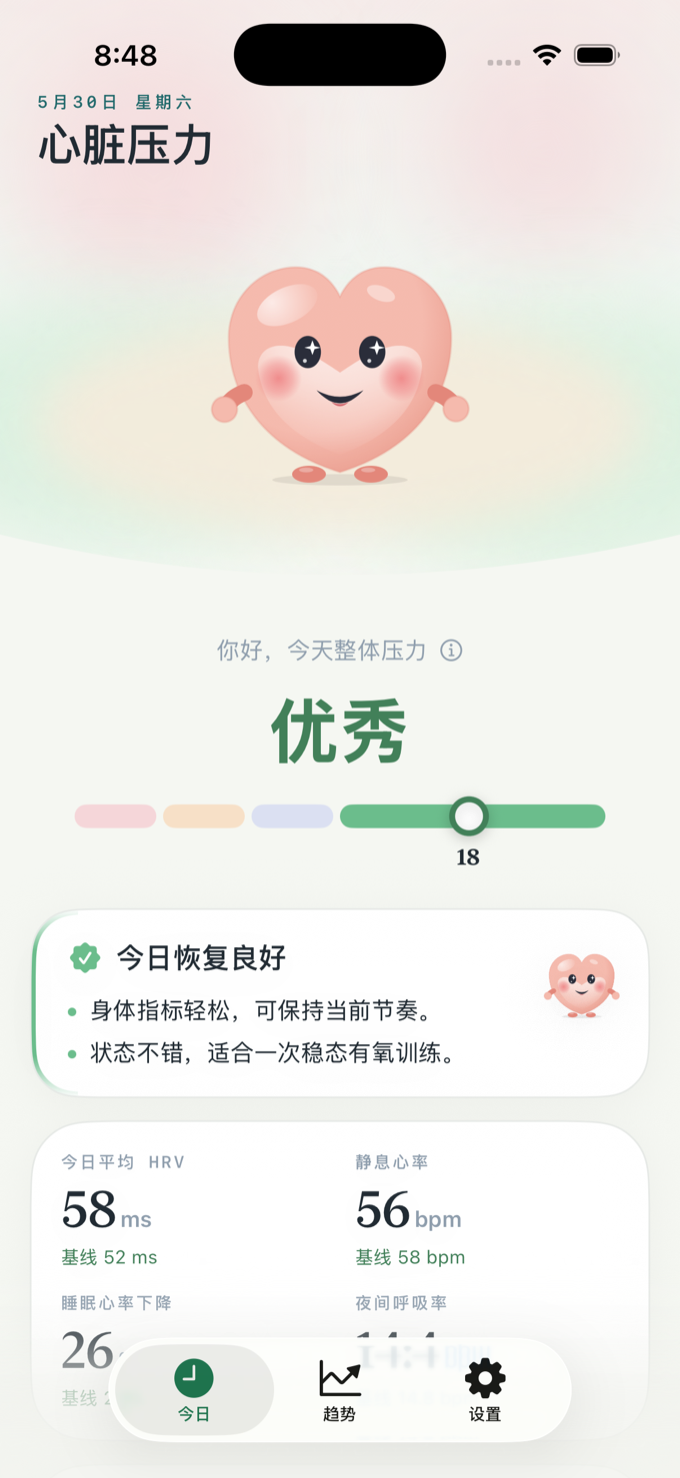
Take better care of yourself. Centered on resting-heart-rate trends, HeartStress turns Apple Watch data into one clear daily score and explains in plain language how today differs from your usual state.
I am a developer, and I have also been an everyday Apple Watch user for more than a decade.
In 2024, Apple Watch heart-rate tracking—especially resting-heart-rate trends and high-heart-rate alerts—showed me that my heart rate had been outside its usual range for several days. I went to the hospital promptly and was later diagnosed with hyperthyroidism.
The watch and app did not make a medical diagnosis. The sustained change in my heart-rate data simply told me that the signals from my body deserved serious attention.
I wanted a clearer, easier-to-understand tool that could help more people notice changes in their heart-rate data sooner. That is how HeartStress began.
A higher-load score can be a reminder that another hour of work may be less useful than a good night’s sleep.
When resting heart rate is well above usual, you have more context for deciding whether to push on or slow down.
The trend may show your heart rate quietly returning to baseline—a small shift you might otherwise miss.
The Apple Watch app and complications show where today sits relative to your own normal.
HeartStress builds a personal baseline from your history. The question is not whether your heart rate meets a universal target, but how today differs from your usual.

Several heart-rate and recovery signals look better than your personal normal. Keep the rhythm that feels good for you.

Today is broadly within your personal baseline. Go about your day as usual and keep listening to how you feel.

Some signals have moved away from your usual state. Consider slowing down and prioritizing sleep and recovery.
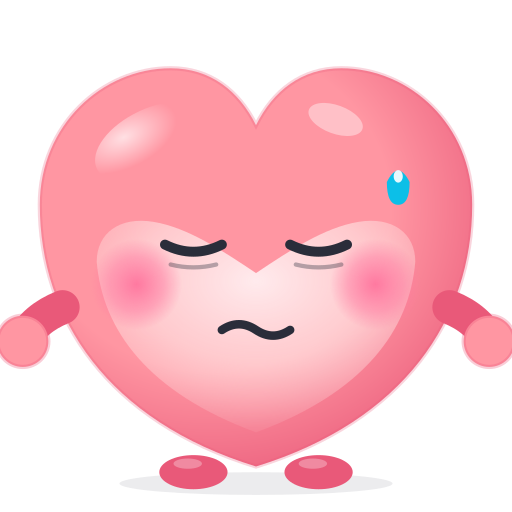
Several signals are clearly outside your personal baseline. Prioritize rest, and seek medical advice if the change persists or comes with symptoms.
From today's score to 7 / 30 / 90-day trends, sleep and activity signals, see scattered data in one meaningful context.
A daily 0–100 heart-stress score with one warm, easy-to-understand explanation.
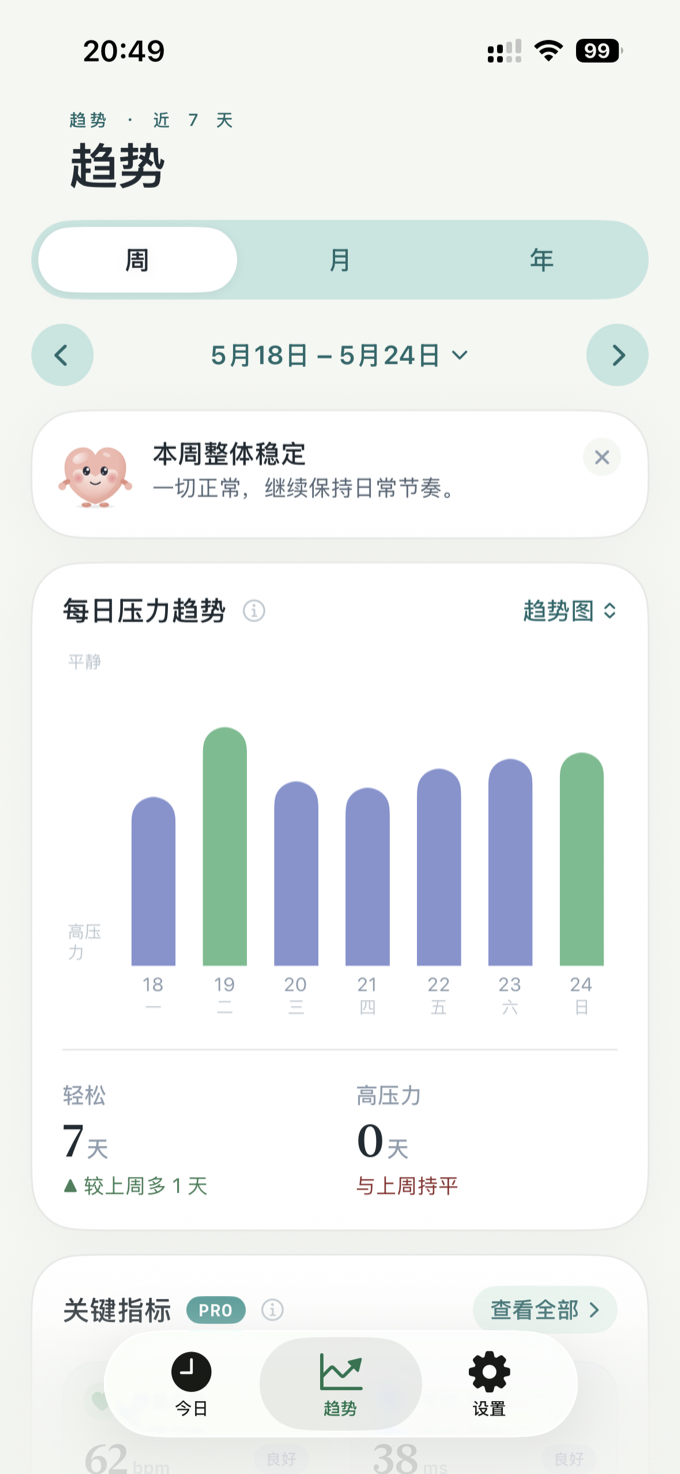
Follow 7 / 30 / 90-day changes and see whether heart rate is returning to baseline.
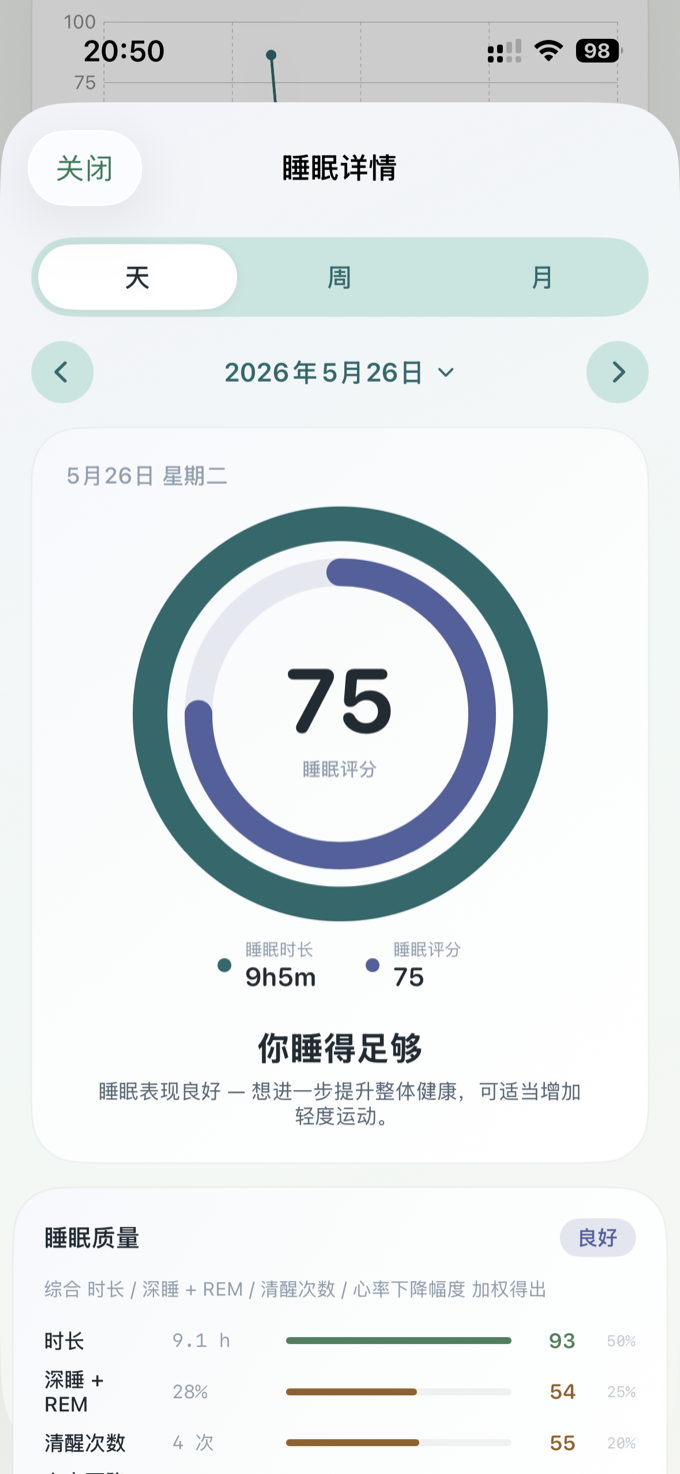
View sleep, overnight heart rate and HRV together to understand recovery.
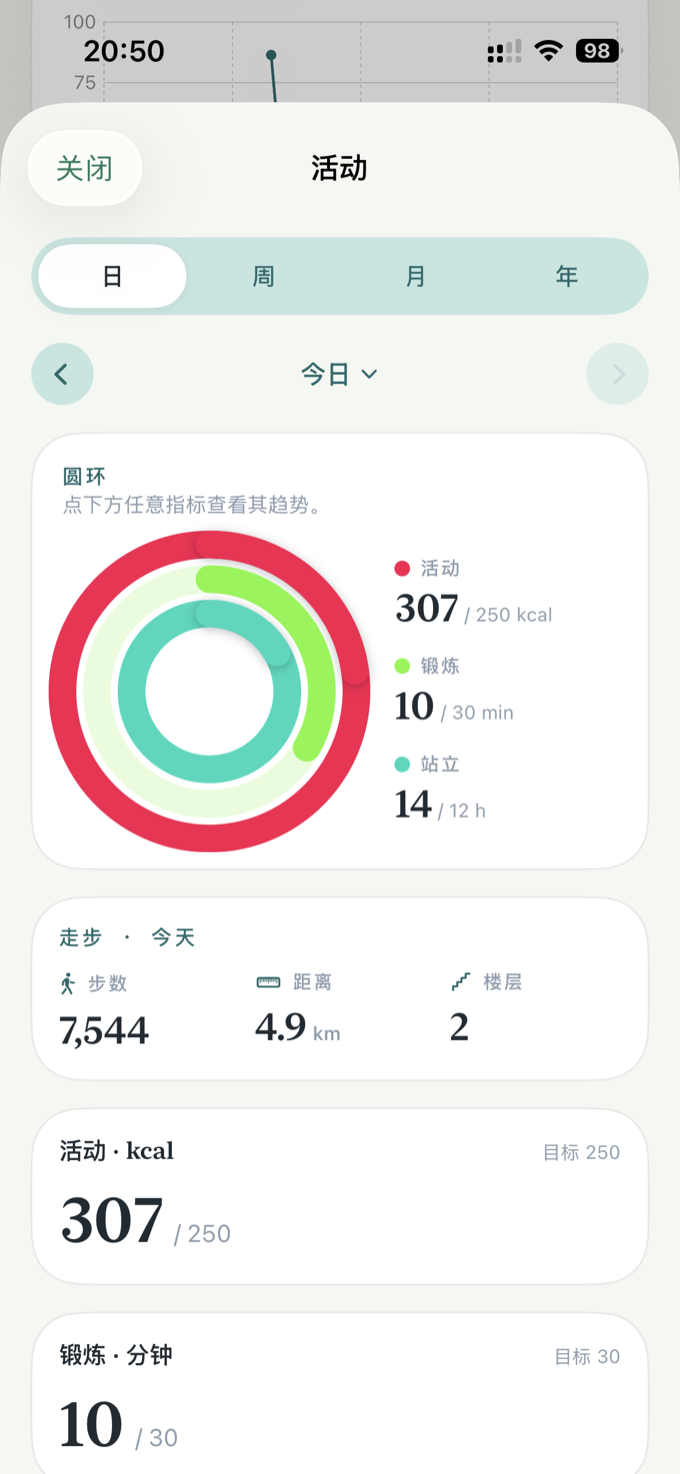
Add activity and workouts for a fuller view of the day's heart-rate changes.
HeartStress reads resting and overnight heart rate, HRV, sleep and activity, then brings them together in a daily 0–100 heart-stress score.
A 0–100 summary of the day's heart-rate and recovery signals, compared with your personal baseline rather than a population average.
Resting heart rate, overnight heart rate, HRV, sleep and activity are ranked by impact, so you can understand why today's score changed.
Follow 7 / 30 / 90-day trends in resting heart rate and related signals, and see when they move away from—or return to—baseline.
Bring sleep duration, overnight heart rate and HRV together to understand how late nights, rest and recovery may be affecting you.
When high load or under-recovery continues, HeartStress gently reminds you to rest and pay closer attention to your body's signals.
Log late nights, stress, caffeine or how you feel alongside heart-rate data to better understand your own patterns.
Summarize key dates, heart-rate factors and recovery notes in a report you can share with a doctor or someone you trust.
Raise your wrist to see at a glance where today sits relative to your own normal—without opening your phone.
MaiBao shifts through four moods to mirror your state. It's easier to act on a friend than on a number.
No. HeartStress helps you notice changes relative to your personal normal. It does not provide medical conclusions or predict or diagnose disease. Seek medical advice if a change persists or comes with symptoms.
Strongly recommended. HRV and overnight HR come primarily from Apple Watch. iPhone-only falls back to an RHR-only model with reduced precision.
No. Every calculation runs locally on your iPhone using Apple HealthKit. Persisted state is encrypted by iOS. There is no server.
Resting heart rate, overnight heart rate, HRV, sleep and activity. HeartStress compares them with your historical baseline, summarizes them in a daily 0–100 score and shows the main contributing signals.
Yes. Both monthly and yearly plans include a 7-day free trial. Cancel a day before renewal at no charge.
More focused, privacy-friendly products crafted by our team.

iPhone · iPad · Apple Watch · CarPlay
An offline player for local music with 20+ audio formats including FLAC and DSD, plus lyrics, widgets and offline playback on Apple Watch.
Explore product
iPhone · iPad
Capture ideas and to-dos with colorful notes, tags, search, Home Screen widgets, password protection and iCloud sync.
Explore productTake better care of yourself. Centered on resting-heart-rate trends, HeartStress turns Apple Watch data into one clear daily score and explains in plain language how today differs from your usual state.
